
What Investors Misunderstand About Caribbean Fashion
by Jessel Brizan | VALSAYN, Trinidad and Tobago | 28 September 2026
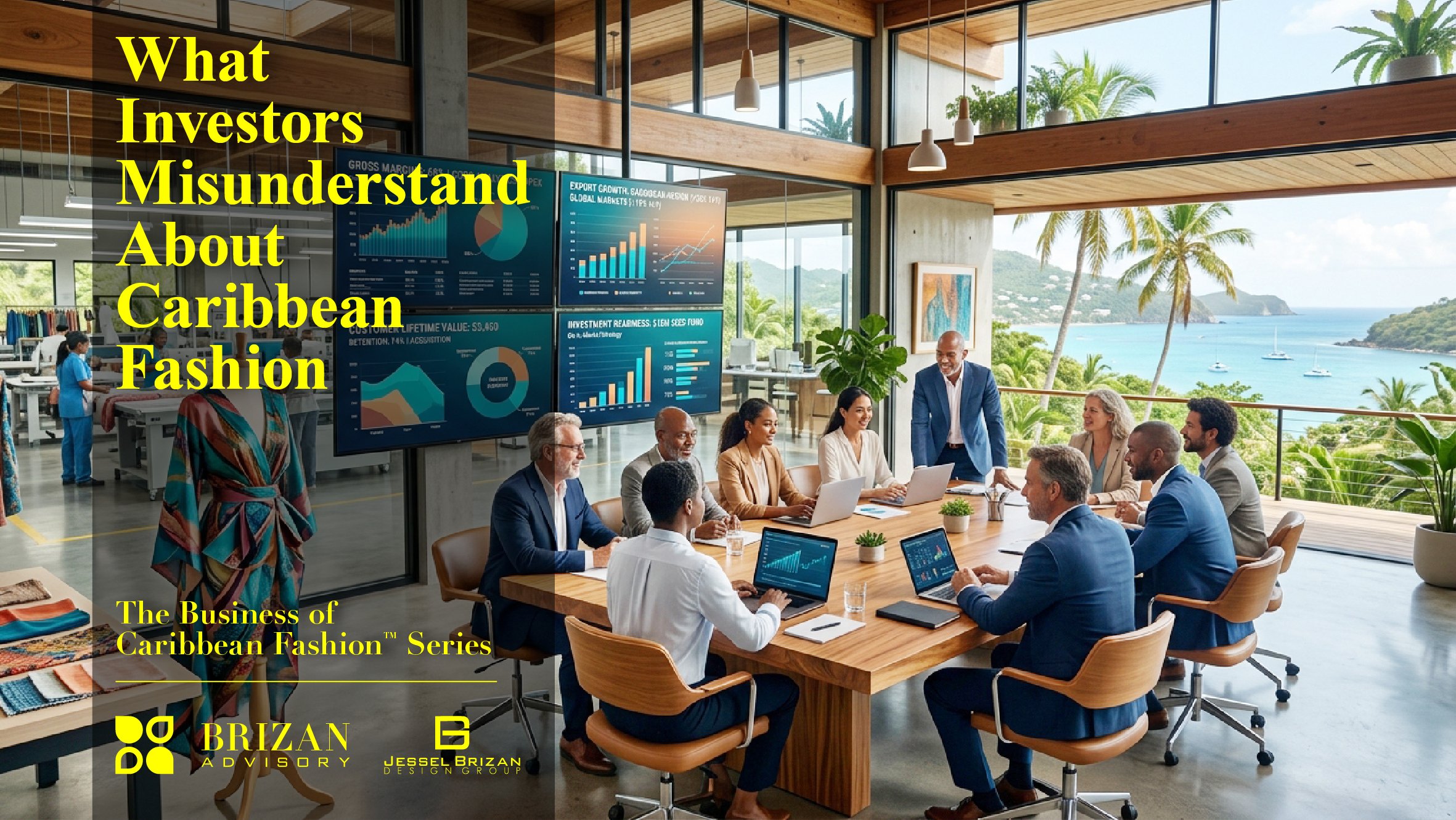
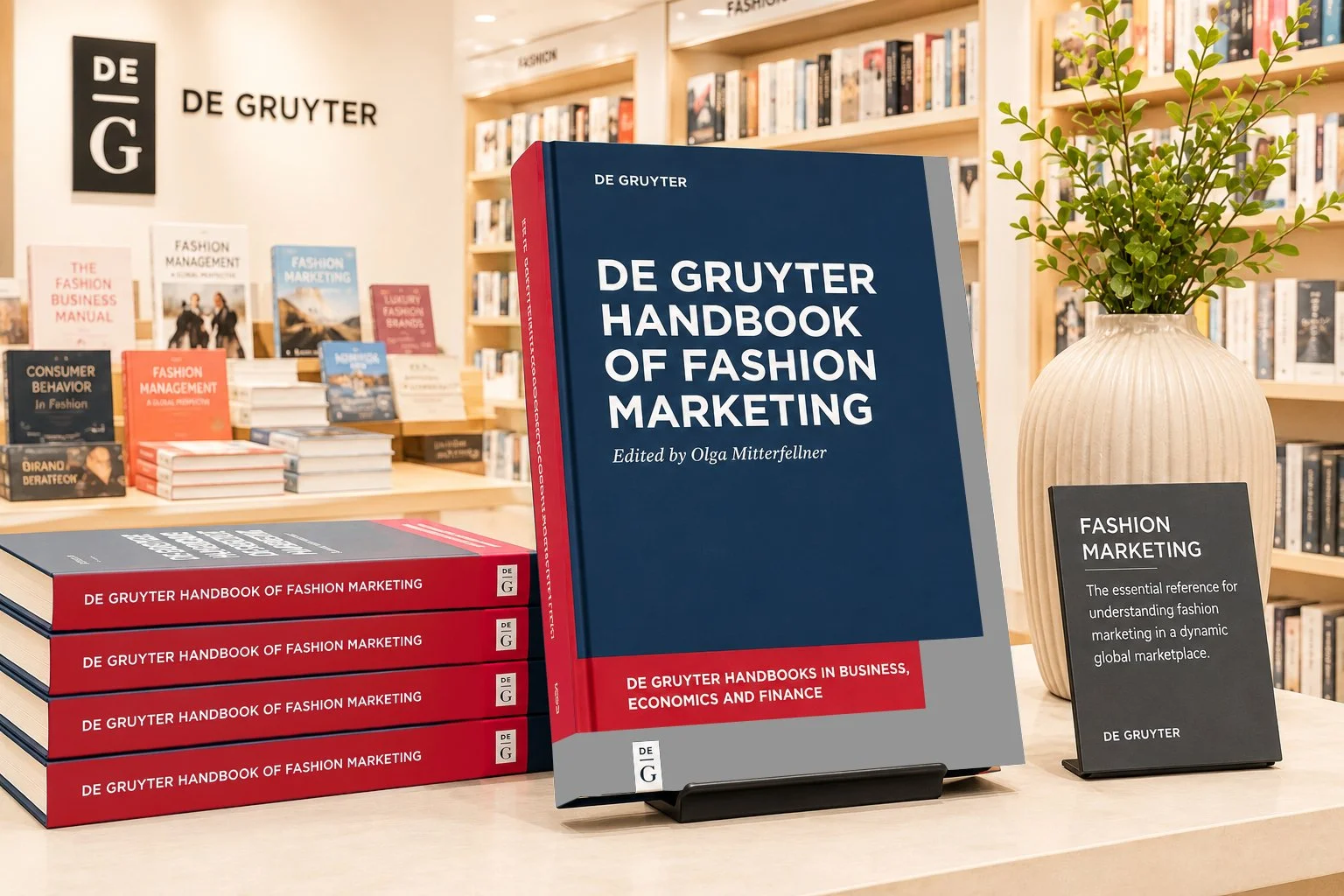
This article is part of our ‘The Business of Caribbean Fashion™’ series, inspired by Chapter 8 by Jessel Brizan, ‘Caribbean Fashion Marketing: Defining Caribbean Fashion’, in the ‘De Gruyter Handbook of Fashion Marketing’ edited by Olga Mitterfellner (De Gruyter Brill, 2026).
A common myth about Caribbean fashion is that investors are simply not interested. In fact, investors tend to focus on industries they understand. Caribbean fashion is often seen as a creative sector rather than an economic one. This misperception leads many investment opportunities to be evaluated through the wrong lens. Design talent is confused with business capability, runway visibility is mistaken for commercial traction, and cultural significance is viewed as a substitute for scalable business models. Consequently, fashion entrepreneurs struggle to secure funding, investors deem the sector too risky, and the industry becomes trapped in a cycle of underinvestment and underdevelopment. The problem is not a lack of opportunity. It is a mismatch between how Caribbean fashion creates value and how investors evaluate it.
Fashion Is Frequently Misclassified
Despite its vibrant creativity and dynamic market, many investors, funding agencies and financial institutions continue to regard fashion primarily as a lifestyle business or an aesthetic pursuit. That perception overlooks the reality that fashion operates across multiple sectors simultaneously, often limiting a broader appreciation of the industry’s potential for innovation and growth. Fashion creates value through various channels, including intellectual property, branding, design, manufacturing, logistics, retail, digital commerce, licensing, tourism, technology, education, media, and sustainability. The world’s largest fashion companies are not simply clothing businesses. They are global brand enterprises whose most valuable assets often lie in intellectual property, customer relationships, and brand equity. The Caribbean should be viewed through the same lens. Its opportunity extends far beyond garment production to building globally differentiated fashion brands that transform the region’s cultural heritage, creativity, and innovation into commercially valuable intellectual property and lasting brand equity.
The Most Valuable Asset Is Often the Brand
Throughout this series, we have explored themes such as storytelling, authenticity, cultural hybridity, sustainability, and diaspora networks. These concepts go beyond mere marketing. They are valuable assets that enhance brand equity. Global luxury companies often derive a significant share of their value from intangible assets such as intellectual property, reputation, design capabilities, and consumer loyalty. While investors in luxury fashion understand this, they are sometimes slower to recognise the same dynamics in emerging fashion ecosystems. For Caribbean fashion businesses, the challenge is to demonstrate that culture is not merely artistic expression. It is a commercially valuable form of differentiation that competitors cannot easily replicate.
The Caribbean's Opportunity Is Broader Than Apparel
One reason investors may underestimate Caribbean fashion is that they often evaluate individual designers rather than the wider ecosystem. The industry's potential spans multiple high-growth sectors, including sustainable textiles, digital fashion, fashion technology, creative education, product licensing, fashion tourism, circular economy services, garment recycling, manufacturing innovation, business consulting, fashion media, professional services, and supply chain technologies. When viewed collectively, these activities represent an emerging creative economy rather than just a niche consumer market. This is the investment narrative that deserves greater attention.
Global Creative Economies Attract Capital Through Ecosystems
South Korea's creative industries attracted investment by demonstrating how entertainment, beauty, technology, fashion, and tourism can reinforce one another. Similarly, African fashion ecosystems have attracted attention from impact investors, development finance institutions, venture capitalists, and international partners by integrating fashion into broader discussions on entrepreneurship, manufacturing, women's economic empowerment, sustainability, and cultural exports. In both cases, investors responded to interconnected systems rather than isolated businesses. The Caribbean needs to adopt a similar approach.
Fashion Entrepreneurs Must Learn to Speak the Language of Capital
The responsibility does not rest solely with investors. Fashion entrepreneurs also need to rethink how they present their businesses. Investors rarely finance creativity alone. They seek scalable opportunities. This means it is essential to demonstrate clear market demand, a unique market position, repeatable revenue streams, effective customer acquisition strategies, operational capabilities, financial discipline, strong governance, and measurable growth potential. While collections may capture attention, solid business models secure investment. Designers who understand finance, data, operations, and strategy are often better positioned to attract capital than equally talented designers who cannot effectively communicate their commercial value.
Redefining Risk
Fashion is often viewed as a high-risk investment, but this assumption deserves closer examination. Risk is not determined by the industry alone. It is also influenced by the availability of information. When investors lack access to reliable market data, industry benchmarks, consumer insights, export statistics, or financial performance indicators, uncertainty increases. This uncertainty, in turn, amplifies the perceived risk associated with investments. To mitigate this risk, we need stronger institutions, better research, more comprehensive industry data, transparent reporting, investment-ready businesses, and clear policy frameworks. In many cases, improving the quality of information may be just as crucial as increasing funding.
Building an Investment-Ready Fashion Industry
If the Caribbean fashion industry wishes to attract greater investment, it must build an investment-ready ecosystem. Universities should strengthen financial literacy and entrepreneurial education for creative professionals. Industry associations need to collect and publish reliable market intelligence. Governments should integrate fashion into their investment promotion strategies, rather than viewing it solely as a cultural sector. Financial institutions should design financing products that reflect the realities of creative businesses. Accelerators and incubators should help entrepreneurs become investor-ready through mentorship, governance support, and strategic planning. Most importantly, fashion businesses should begin tracking the key indicators that matter to investors. These include customer lifetime value, gross margins, inventory turnover, export growth, digital performance, repeat purchase rates, and brand equity. Investment is driven by confidence, and confidence is built on evidence.
Capital Follows Strategy
Investors are not seeking beautiful collections. They are seeking sustainable businesses. They are not investing in garments. They are investing in competitive advantage. The Caribbean has many of the elements investors seek, including distinctive intellectual property, global cultural influence, authentic brand stories, growing diaspora markets, sustainability opportunities, creative talent, and digital connectivity. The challenge is to integrate these assets into businesses that can generate long-term value. Ultimately, capital is invested in businesses that can turn creativity into commercial success.
The future of Caribbean fashion will depend on its ability to transform innovative ideas into investable businesses.
Click here to review The Business of Caribbean Fashion™ series.
Click here to order a copy of the De Gruyter Handbook of Fashion Marketing.
Archive
- November 2026
- October 2026
- September 2026
- August 2026
- July 2026
- June 2026
- May 2026
- April 2026
- March 2026
- February 2026
- October 2025
- September 2025
- July 2025
- May 2025
- March 2025
- September 2023
- August 2023
- June 2023
- May 2023
- January 2023
- September 2022
- February 2022
- May 2021
- April 2021
- March 2021
- December 2020
- October 2020
- August 2020
- July 2020
- June 2020
- March 2020
- September 2019
- June 2019
- May 2019
- March 2019
- February 2019
- September 2018
- September 2016
- January 2016