
Cultural Hybridity Is the Caribbean’s Greatest Competitive Advantage
by Jessel Brizan | VALSAYN, Trinidad and Tobago | 4 August 2026
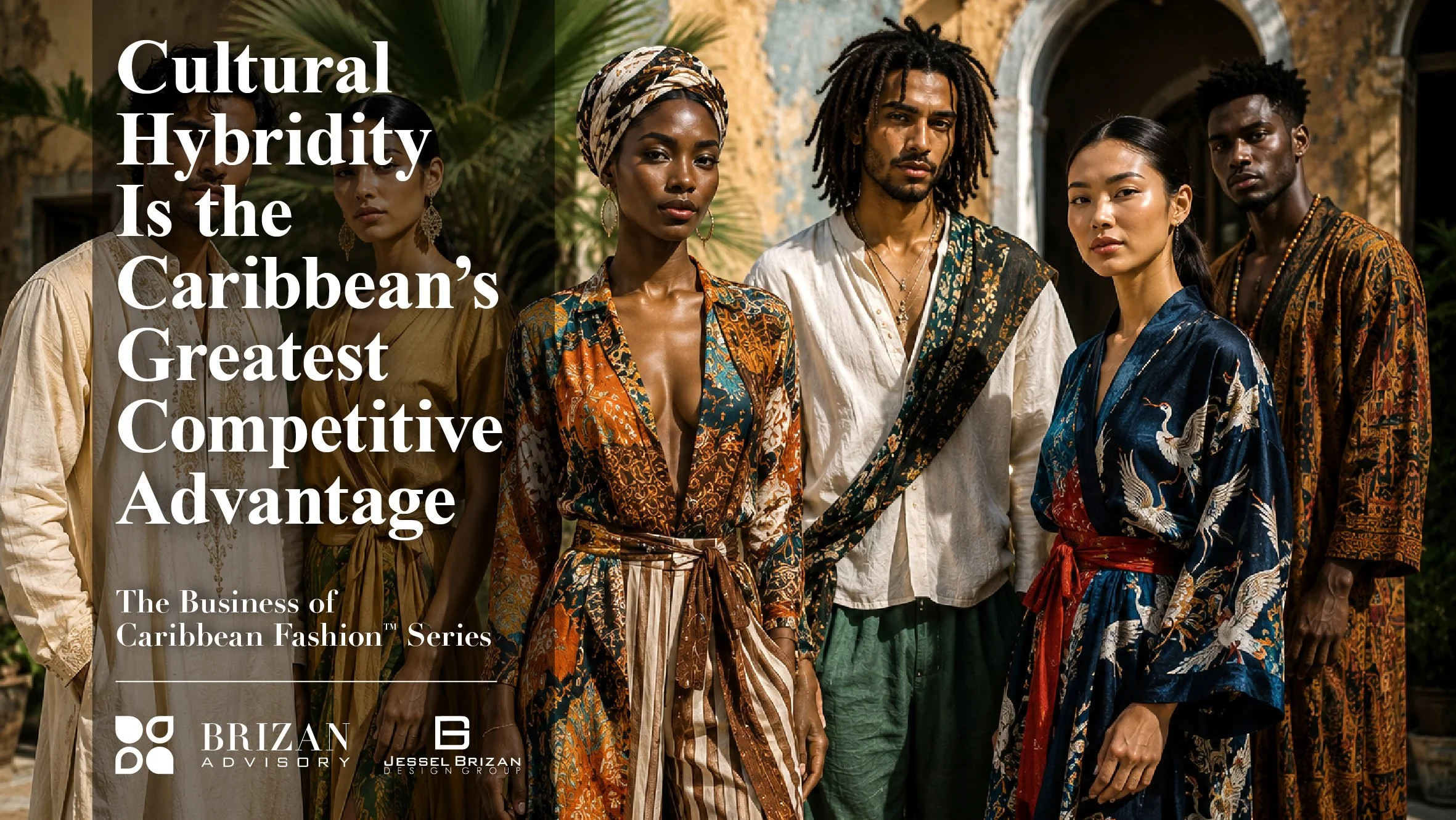
This article is part of our ‘The Business of Caribbean Fashion™’ series, based on Chapter 8 by Jessel Brizan, ‘Caribbean Fashion Marketing: Defining Caribbean Fashion’, in the ‘De Gruyter Handbook of Fashion Marketing’ edited by Olga Mitterfellner (DeGruyter Brill, 2026).
The Caribbean fashion industry is still searching for its defining identity, but it may have been looking in the wrong places. The Caribbean's greatest competitive advantage is not a particular motif, textile, silhouette, colour palette, or design aesthetic. It is cultural hybridity. The tapestry of Caribbean society is characterised by a rich, distinctive heritage that reflects a diverse blend of Indigenous, African, European, Asian, and Middle Eastern influences. This combination of ethnic and cultural diversity created a unique, vibrant, and distinctive Caribbean cultural identity, contributing to a dynamic and varied fashion narrative in the region. This cultural hybridity has created a unique synthesis of cultural expressions, generating innovative perspectives and narratives that resonate with a global audience (Brizan, 2024). While many industries view complexity as a challenge, in the global creative economy, cultural hybridity is a form of differentiation. The Caribbean should recognise it as an asset, not a disadvantage.
The Global Search for Distinctiveness
The fashion industry has entered a new era where uniqueness is becoming increasingly valuable. Today’s consumers have unprecedented access to a wide variety of products, brands, and content. Digital commerce has created an abundance of choices, while social media has accelerated trend cycles. Additionally, artificial intelligence is making design tools more accessible than ever before. As a result, maintaining a competitive advantage through products alone is becoming more challenging. Brands are now competing based on significance, identity, and culture. The question consumers increasingly ask is not, "What does this product look like?" but rather, "What makes this brand unique?" This shift creates a significant opportunity for the Caribbean, as few regions can provide a cultural narrative as rich, dynamic, and globally relevant as its own.
The Caribbean Is More Than a Melting Pot
The term "melting pot" is often used to describe culturally diverse societies, but the Caribbean represents something even more powerful. Rather than blending cultures into uniformity, Caribbean societies have continuously combined, adapted, reinterpreted, and reinvented influences across generations. This process has produced globally influential forms of music, cuisine, language, art, literature, and cultural expression. Fashion is no exception. The Caribbean's creative identity has never emerged from a single tradition. It has evolved through interactions between traditions. That distinction is significant because innovation frequently occurs at the intersection of different ideas, perspectives, and experiences. In business strategy, this is often referred to as recombination—the process of combining existing products, technologies, or ideas in new ways to create value. The Caribbean has been practising cultural recombination for centuries.
Global Fashion's Most Influential Brands Understand Cultural Synthesis
Some of the world's most successful fashion industries have been built on the ability to reinterpret and combine cultural influences. Japanese fashion gained global recognition not by replicating Western fashion, but by blending Japanese aesthetics, craftsmanship, and cultural perspectives with contemporary design. Designers such as Yohji Yamamoto, Rei Kawakubo, and Issey Miyake transformed global fashion by offering new ways of thinking about silhouette, construction, and identity. Similarly, South Korean fashion has evolved through a combination of local culture, technology, entertainment, youth culture, and global consumer trends. Even luxury fashion houses increasingly draw inspiration from multiple cultural traditions to create products that resonate with diverse global audiences. Cultural influence becomes commercially valuable when it is interpreted, refined, and translated into products that feel both authentic and contemporary. The Caribbean possesses exactly this potential.
The Caribbean's Competitive Position Is Unique
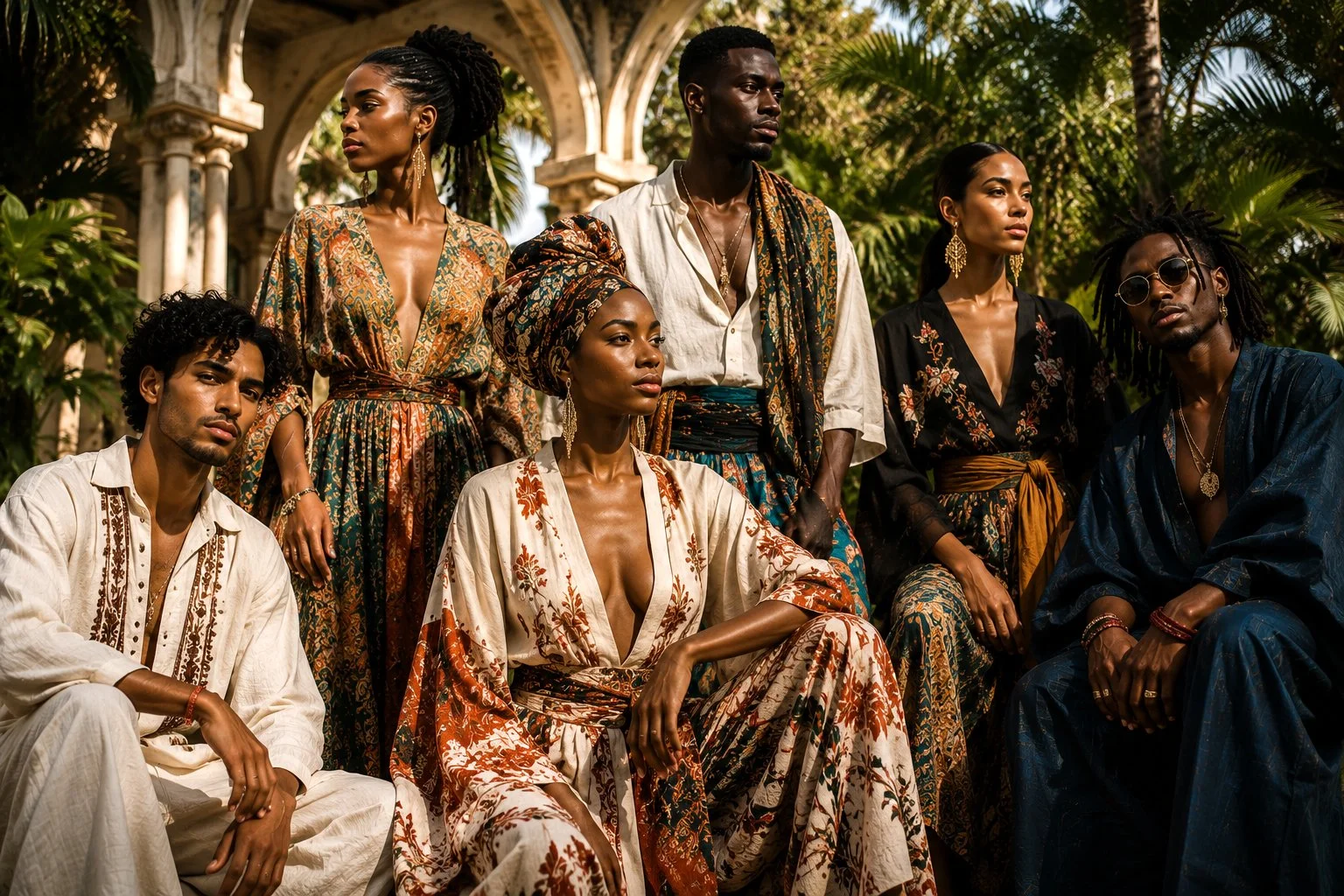
Many countries have strong cultural identities, but few have multiple strong identities coexisting at the same time. This is where the Caribbean occupies a unique position. A single Caribbean country may reflect African heritage, Indian traditions, European architecture, Chinese entrepreneurship, Indigenous influences, and global contemporary culture within the same social environment. This diversity creates a broader palette of creative inspiration than many competing markets. For fashion businesses, this means access to richer storytelling opportunities, more diverse design references, broader consumer appeal, and greater creative flexibility. Strategically, cultural hybridity expands the innovation space. It increases the number of ways designers can create products that feel distinctive in a crowded global marketplace.
Why This Matters Commercially
The commercial implications are significant. Fashion businesses succeed when they offer unique products that consumers cannot easily find elsewhere. If Caribbean fashion is positioned solely around beaches, tropical motifs, or resort wear, it competes within a relatively narrow category. However, when brands embrace the full complexity of Caribbean identity, entirely new possibilities emerge. Luxury brands can draw upon heritage and craftsmanship. Contemporary brands can explore urban Caribbean culture. Sustainable brands can connect traditional knowledge with modern environmental priorities. Lifestyle brands can tell stories rooted in migration, resilience, entrepreneurship, and cultural exchange. The opportunity is not to create one version of Caribbean fashion. The opportunity is to create many versions. This diversification increases relevance across multiple customer segments, markets, and price points.
The Risk of Oversimplification
One of the greatest threats facing Caribbean fashion is not competition from other regions. It is oversimplification. When industries allow themselves to be defined by narrow stereotypes, they unintentionally limit their growth potential. The Caribbean's complexity can sometimes make branding more challenging. It is easier to market a simple story than a complex narrative. But simplicity should not come at the expense of authenticity. The most successful place brands in the world manage complexity instead of trying to eliminate it. The Caribbean should adopt this approach. Its diversity should not be seen as a branding challenge but rather as a strategic advantage.
Building a New Narrative for Caribbean Fashion
The future of Caribbean fashion development requires a shift in mindset. Rather than asking, "What is Caribbean fashion?" the industry should begin asking, "What can Caribbean fashion become?" The answer is broader than many people assume. It encompasses luxury, contemporary fashion, sustainability, craftsmanship, technology, cultural heritage, and innovation. Most importantly, it involves the ability to draw from multiple worlds simultaneously. This capability is increasingly rare, and rarity creates value.
The Future Belongs to Those Who Embrace Complexity
For years, the Caribbean has been encouraged to simplify its culture, identity, and story for international audiences. Fashion presents an opportunity to do the opposite. The future competitiveness of Caribbean fashion may not lie in narrowing its identity, but in fully embracing its complexity. The region's greatest strength has always been its diversity, not a single culture, influence, or aesthetic. Its power lies in the fusion of many influences that together create something entirely new. In a world searching for originality, that may be the Caribbean's most valuable asset of all. The Caribbean's competitive advantage is not found in any one tradition. It is found in the extraordinary ability to transform many traditions into something uniquely its own. Cultural hybridity is not just part of the Caribbean narrative. It is also the foundation of its future.
Click here to review The Business of Caribbean Fashion™ series.
Click here to order a copy of the De Gruyter Handbook of Fashion Marketing.
References:
Brizan, J. (2024) ‘A Critical Analysis of the Influence of Jamaican Cultural Identity on Global Fashion’, 7FAMN002W: The Fashion Business Project. University of Westminster. Unpublished essay.

Archive
- September 2026
- August 2026
- July 2026
- June 2026
- May 2026
- April 2026
- March 2026
- February 2026
- October 2025
- September 2025
- July 2025
- May 2025
- March 2025
- September 2023
- August 2023
- June 2023
- May 2023
- January 2023
- September 2022
- February 2022
- May 2021
- April 2021
- March 2021
- December 2020
- October 2020
- August 2020
- July 2020
- June 2020
- March 2020
- September 2019
- June 2019
- May 2019
- March 2019
- February 2019
- September 2018
- September 2016
- January 2016