
The Global Fashion Industry Has Been Borrowing From the Caribbean for Decades
by Jessel Brizan | VALSAYN, Trinidad and Tobago | 1 June 2026
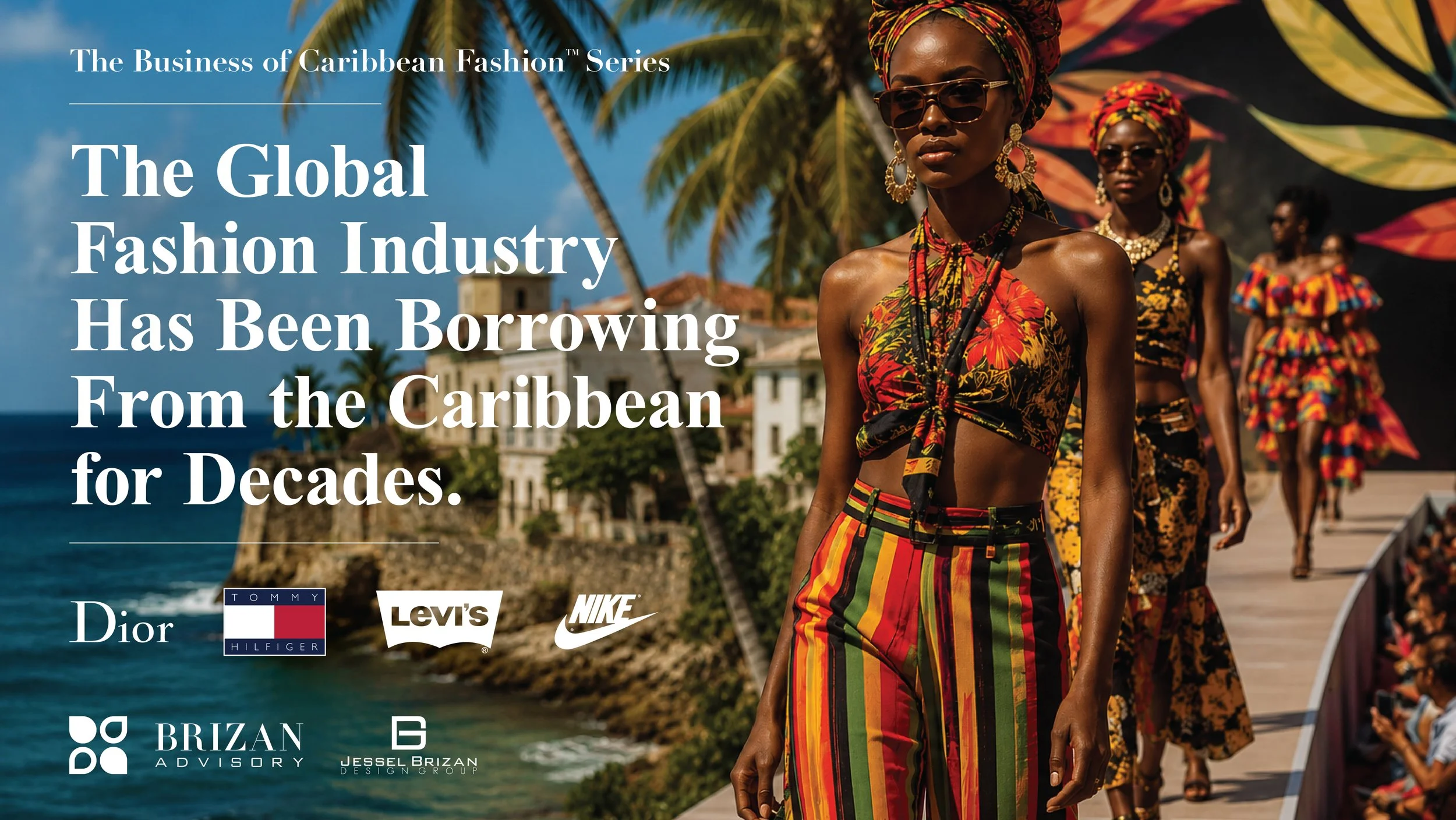
This article is part of our ‘The Business of Caribbean Fashion™’ series, based on Chapter 8 by Jessel Brizan, ‘Caribbean Fashion Marketing: Defining Caribbean Fashion’, in the ‘De Gruyter Handbook of Fashion Marketing’ edited by Olga Mitterfellner (De Gruyter Brill, 2026).
For decades, the global fashion industry has celebrated Caribbean aesthetics while largely overlooking the Caribbean fashion industry itself. From luxury runways to streetwear collections, global brands have repeatedly drawn inspiration from Caribbean culture — its colours, music, movement, spirituality, migration narratives, carnival traditions, and diasporic identities. Yet despite this undeniable influence, the Caribbean remains underrepresented in the global commercial fashion ecosystem. The issue is not whether the Caribbean has cultural influence. The issue is who is capturing the economic value from that influence.
Caribbean Culture Has Become a Global Fashion Language
The Caribbean’s influence on fashion extends far beyond “tropical prints” and resort wear marketing campaigns. Caribbean identity has helped shape:
Music-driven fashion culture
Streetwear aesthetics
Luxury storytelling
Carnival-inspired design language
Diaspora fashion movements
Contemporary masculinity and femininity narratives
Hybrid cultural dressing
Cultural Hybridity
This influence is rooted in the Caribbean’s unique historical formation, shaped by African heritage, European colonisation, Indian indentureship, migration, resistance, and cultural fusion. What emerged was not a single aesthetic, but a highly adaptive and globally resonant cultural identity. In a strategic context, the Caribbean represents one of the world’s strongest examples of cultural hybridity—the blending of multiple cultural influences into entirely new forms of expression. Today, that hybridity has become commercially valuable.

Levi's 2018 Rockers Vintage Collection (Brizan, 2024)
The Global Fashion Industry Has Already Validated Caribbean Influence
The market evidence is undeniable. Over the years, major global brands have repeatedly incorporated Caribbean references into their collections and campaigns. Notable examples include:
Christian Dior’s Rasta-inspired Spring/Summer 2004 collection
Tommy Hilfiger’s Caribbean-inspired Spring 2016 runway presentation
Levi Strauss & Co.’s Caribbean-influenced 2018 Rockers Vintage collection
Nike’s “West Indies” Air Force 1 2022 release celebrating Caribbean diaspora culture in Brooklyn
Simultaneously, designers of Caribbean heritage, such as Grace Wales Bonner, Martine Rose, Nicholas Daley, and Fe Noel, have emerged as some of the most influential creative voices in global fashion. These designers are not successful because they abandoned Caribbean identity. They are successful because they transformed their cultural identity into strategic brand positioning. This distinction is important.
The Caribbean’s Competitive Advantage Is Cultural Capital
In global fashion, cultural relevance has become economic currency. Consumers increasingly seek authenticity, heritage, emotional storytelling, identity-driven brands, cultural connection, and meaning beyond products. This shift has fundamentally changed the competitive landscape. Fashion brands now compete not only on product design or manufacturing scale but also on their narrative power. And this is where the Caribbean holds a significant yet untapped advantage.
The Caribbean is not culturally homogeneous. It is one of the most culturally diverse regions in the world, with a rich cultural tapestry. This complexity creates rich storytelling opportunities that global consumers increasingly value. In many ways, the future of fashion belongs to brands with distinct cultural perspectives rather than generic global positioning. The irony is that while the global industry actively draws inspiration from Caribbean culture, many Caribbean fashion businesses still struggle to effectively commercialise their own cultural assets.
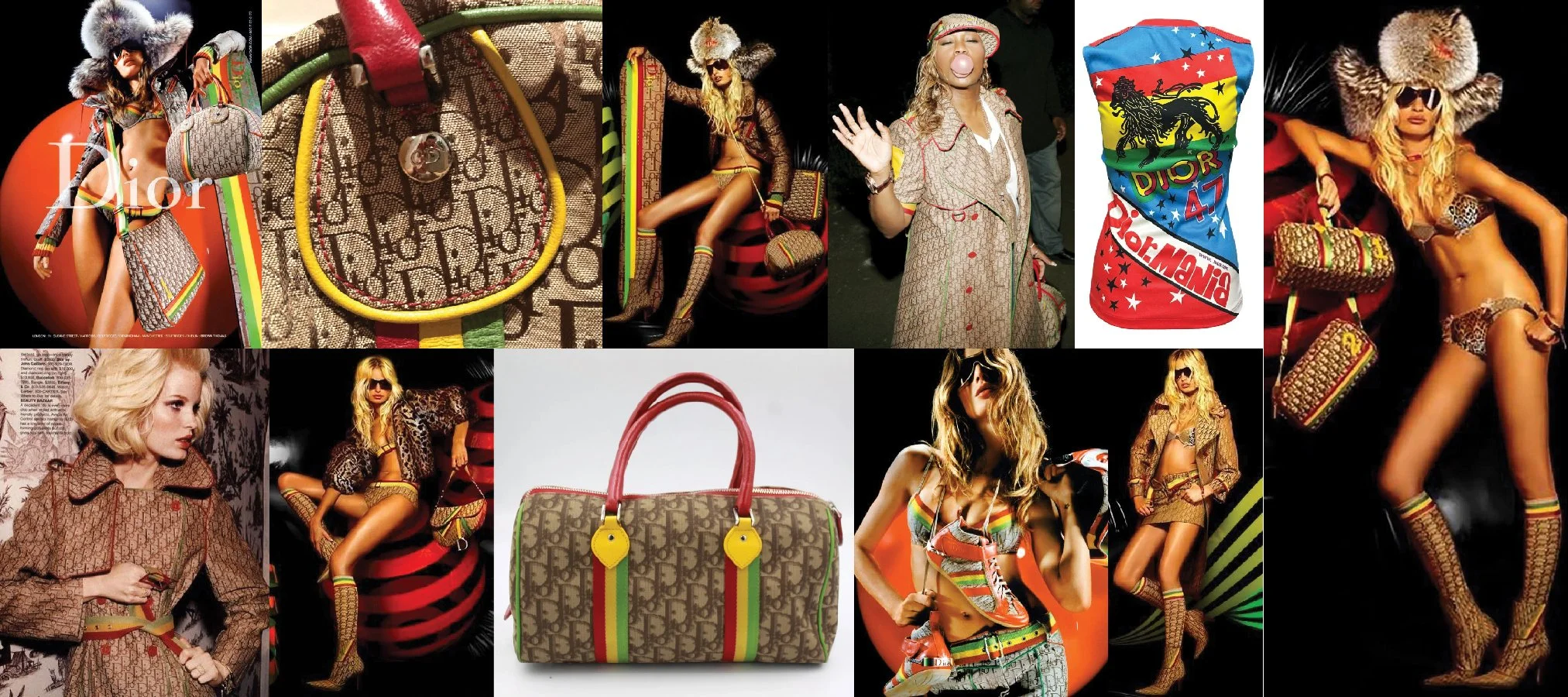
Dior 2004 Rasta Collection (Brizan, 2024)
Why the Caribbean Is Still Missing from the Global Fashion Power Structure
If Caribbean influence is so significant, why has the region not developed a stronger presence in the global fashion industry? The answer is structural, not creative. The Caribbean does not have a creativity problem. It has an infrastructure problem. Key barriers include:
Limited access to capital
Fragmented regional markets
Weak manufacturing ecosystems
High production and logistics costs
Limited buyer access
Inconsistent government support
Insufficient fashion business education
Weak global distribution systems
In many cases, Caribbean designers are competing globally while operating within locally constrained ecosystems. In contrast, larger international brands benefit from scalable supply chains, global media access, advanced marketing infrastructure, institutional support, international retail relationships, and investment capital. As a result, Caribbean culture is often commercialised and monetised by external entities that possess stronger commercial systems.
The Industry Opportunity Is Bigger Than Fashion
This conversation is not simply about clothing. It is about ownership within the global creative economy. Fashion sits at the intersection of culture, tourism, media, entertainment, identity, export development, and nation branding. For the Caribbean, fashion represents both a form of cultural expression and a significant economic opportunity. A stronger Caribbean fashion industry could lead to:
Increased export revenue
Job creation
Opportunities for creative entrepreneurship
Enhanced integration with tourism
Preservation of cultural heritage
Expanded soft power influence (cultural diplomacy and nation identity)
Growth of the diaspora market
Globally, countries increasingly use creative industries as strategic economic assets. And the Caribbean should adopt this approach.
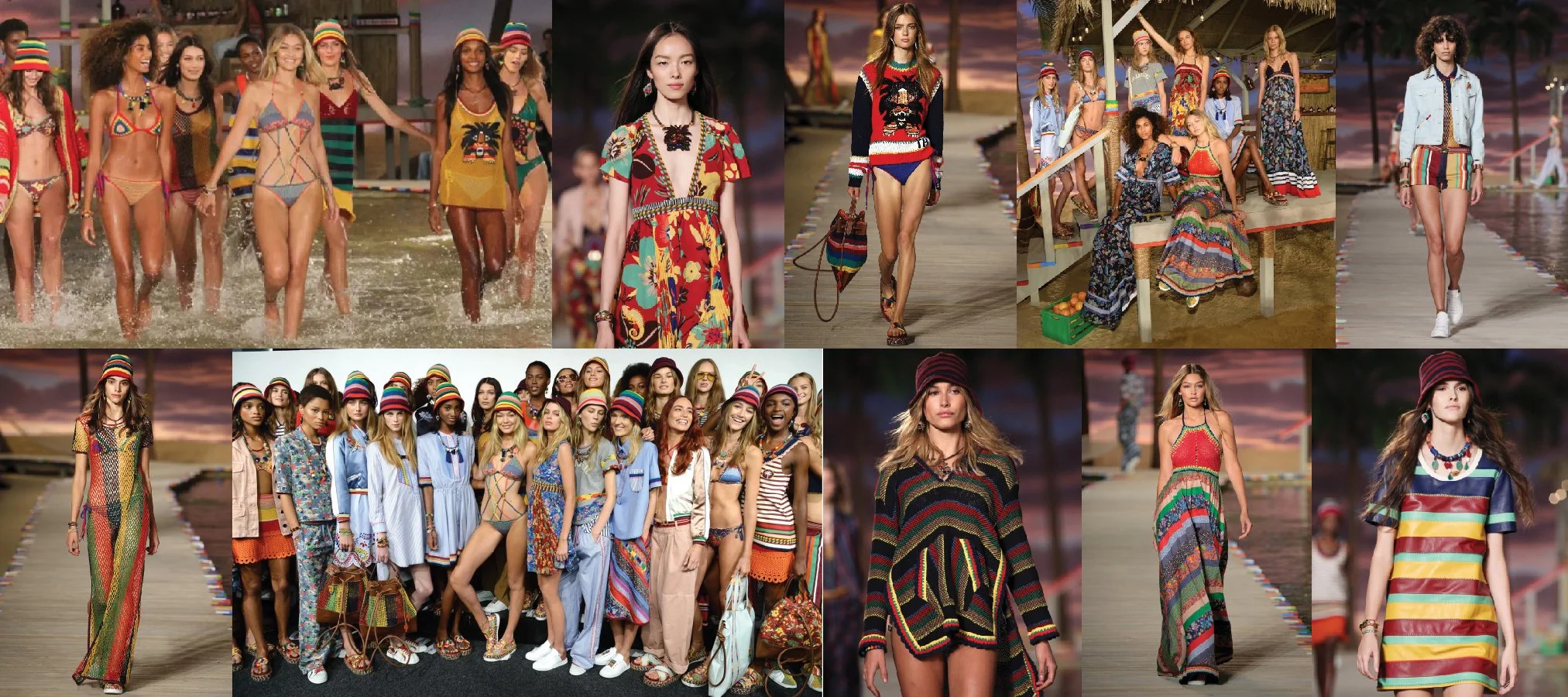
Tommy Hilfiger Spring 2016 RTW Collection (Brizan, 2024)
What Must Happen Next
The future growth of Caribbean fashion will require a shift from creative recognition to commercial strategy. That means:
Building stronger regional fashion infrastructure
Expanding fashion business education
Developing manufacturing capabilities
Creating export-oriented policies
Strengthening diaspora distribution networks
Investing in digital commerce
Positioning Caribbean fashion within premium and cultural luxury markets
Most importantly, Caribbean fashion businesses must view culture as intellectual property and strategic brand equity, rather than merely artistic inspiration. Because this is exactly how the global fashion industry perceives it.
The global fashion industry has been borrowing from the Caribbean for decades. The key issue now is whether the Caribbean can create the commercial systems needed to capitalise on its cultural influence.
De Gruyter Handbook of Fashion Marketing is available for pre-order now at: https://lnkd.in/eynGQ8eH
References:
Brizan, J. (2024) A Critical Analysis of the Influence of Jamaican Cultural Identity on Global Fashion. Unpublished MA dissertation. University of Westminster, London.
-
September 2026
- 14 Sept 2026 What Caribbean Fashion Can Learn From K-Beauty and African Fashion 14 Sept 2026
- 7 Sept 2026 Sustainability Could Become Caribbean Fashion’s Global Advantage 7 Sept 2026
- 1 Sept 2026 The Future Caribbean Fashion Consumer Is Digital, Global and Culture-Driven 1 Sept 2026
-
August 2026
- 24 Aug 2026 The Diaspora Is Caribbean Fashion’s Most Powerful Global Distribution Network 24 Aug 2026
- 17 Aug 2026 Why Authenticity Has Become a Commercial Strategy 17 Aug 2026
- 12 Aug 2026 Storytelling Is Caribbean Fashion’s Untapped Superpower 12 Aug 2026
- 10 Aug 2026 Jessel Brizan Design Group Launches Brizan Advisory 10 Aug 2026
- 4 Aug 2026 Cultural Hybridity Is the Caribbean’s Greatest Competitive Advantage 4 Aug 2026
-
July 2026
- 29 Jul 2026 Why Caribbean Fashion Is More Than ‘Tropical Prints’ 29 Jul 2026
- 20 Jul 2026 Caribbean Fashion Must Stop Competing on Price 20 Jul 2026
- 13 Jul 2026 Tourism and Fashion: The Caribbean’s Most Untapped Partnership 13 Jul 2026
- 6 Jul 2026 The Future of Caribbean Fashion Depends on Commercial Education 6 Jul 2026
-
June 2026
- 29 Jun 2026 The Caribbean Fashion Industry Needs More CEOs, Not Just Designers 29 Jun 2026
- 27 Jun 2026 Jessel Brizan Featured in Trinidad Guardian: A Mission to Transform Caribbean Fashion 27 Jun 2026
- 24 Jun 2026 Jessel Brizan Donates Book to UTT Libraries 24 Jun 2026
- 22 Jun 2026 Why Caribbean Fashion Brands Struggle to Scale Internationally 22 Jun 2026
- 15 Jun 2026 Caribbean Fashion Has a Branding Problem, Not a Creativity Problem 15 Jun 2026
- 10 Jun 2026 The Evolution of Jessel Brizan Design Group 10 Jun 2026
- 8 Jun 2026 Fashion Is One of the Caribbean’s Most Undervalued Economic Assets 8 Jun 2026
- 1 Jun 2026 Brizan Contributes to De Gruyter Handbook of Fashion Marketing 1 Jun 2026
- 1 Jun 2026 The Global Fashion Industry Has Been Borrowing From the Caribbean for Decades 1 Jun 2026
-
May 2026
- 26 May 2026 JBDG set to launch ‘The Business of Caribbean Fashion™’ Series 26 May 2026
- 18 May 2026 Wholesale vs Direct-to-Consumer: Which Is Right for You? 18 May 2026
- 11 May 2026 The Follow-Up Strategy That Turns Meetings Into Orders 11 May 2026
- 6 May 2026 Acknowledging ‘Selling Fashion Collections’ 6 May 2026
- 4 May 2026 The 7 Costly Mistakes Designers Make Before Meeting Buyers 4 May 2026
- 1 May 2026 Brizan Awards the SFC Book Giveaway Prize to Naballah Chi 1 May 2026
-
April 2026
- 29 Apr 2026 Jessel Brizan Publishes Third Book 29 Apr 2026
- 27 Apr 2026 Why I Wrote Selling Fashion Collections 27 Apr 2026
- 20 Apr 2026 Total Image Projection: How to Win a Buyer Meeting 20 Apr 2026
- 13 Apr 2026 The Perfect Buyer Meeting Kit 13 Apr 2026
- 9 Apr 2026 How to Research Buyers Before You Pitch 9 Apr 2026
-
March 2026
- 30 Mar 2026 What Buyers Really Look for in a Collection 30 Mar 2026
- 24 Mar 2026 How to Create a Line Plan That Appeals to Buyers 24 Mar 2026
- 23 Mar 2026 Mastering Your Pricing Strategy in Fashion 23 Mar 2026
- 16 Mar 2026 Understanding Design Markets: Where Does Your Brand Truly Sit? 16 Mar 2026
- 3 Mar 2026 Creativity Is Not Enough: Why Fashion Designers Struggle to Sell 3 Mar 2026
-
February 2026
- 24 Feb 2026 Why Design Structure Is the Backbone of a Sellable Fashion Collection 24 Feb 2026
-
October 2025
- 17 Oct 2025 14 Core Principles of Brand Ethos 17 Oct 2025
-
September 2025
- 4 Sept 2025 An Affirmation from Louis Vuitton Beauty, Pt. 2 4 Sept 2025
-
July 2025
- 27 Jul 2025 JBDG Selected for Showcase at Caribbean Investment Forum 2025 27 Jul 2025
-
May 2025
- 7 May 2025 The Blueprint of Fashion Design 7 May 2025
- 3 May 2025 The Five Segments of the Global Fashion Industry 3 May 2025
-
March 2025
- 20 Mar 2025 An Affirmation from Louis Vuitton Beauty 20 Mar 2025
-
September 2023
- 12 Sept 2023 I Heart TT™ 12 Sept 2023
- 3 Sept 2023 Why Companies Value Teamwork 3 Sept 2023
-
August 2023
- 18 Aug 2023 The Power of Purpose, Prayer and Perseverance 18 Aug 2023
-
June 2023
- 11 Jun 2023 The Divine Hierarchy of Life © 11 Jun 2023
-
May 2023
- 31 May 2023 How to Successfully Navigate a Fashion Internship 31 May 2023
-
January 2023
- 4 Jan 2023 Made To Wear™ 4 Jan 2023
-
September 2022
- 7 Sept 2022 The definitive guide to Caribbean fashion selling seasons 7 Sept 2022
-
February 2022
- 3 Feb 2022 Ethos 3 Feb 2022
-
May 2021
- 23 May 2021 The Art of the T 23 May 2021
-
April 2021
- 28 Apr 2021 I Heart TT™ introduces new merch 28 Apr 2021
-
March 2021
- 19 Mar 2021 AUX reveals redesigned logo to mark anniversary 19 Mar 2021
- 11 Mar 2021 AUX introduces digital catalogue 11 Mar 2021
-
December 2020
- 31 Dec 2020 2020: The year that was 31 Dec 2020
-
October 2020
- 4 Oct 2020 Brizan Publishing launches second publication 4 Oct 2020
-
August 2020
- 30 Aug 2020 AUX reveals visuals of proposed concept for Breezes 30 Aug 2020
-
July 2020
- 1 Jul 2020 Brizan Publishing issues first publication 1 Jul 2020
-
June 2020
- 21 Jun 2020 Brizan Publishing readies for launch 21 Jun 2020
-
March 2020
- 10 Mar 2020 I Heart TT gives to Cyril Ross 10 Mar 2020
-
September 2019
- 19 Sept 2019 Biography: Jessel Brizan 19 Sept 2019
-
June 2019
- 30 Jun 2019 Selling Your Collection 30 Jun 2019
-
May 2019
- 26 May 2019 Technical Package Development 26 May 2019
- 19 May 2019 Developing Caribbean fashion 19 May 2019
-
March 2019
- 10 Mar 2019 Introducing AUX 10 Mar 2019
-
February 2019
- 24 Feb 2019 Philanthropy Through Fashion 24 Feb 2019
- 1 Feb 2019 Celebrate with us! 1 Feb 2019
-
September 2018
- 30 Sept 2018 Island Safari Trend Inspiration 30 Sept 2018
-
September 2016
- 5 Sept 2016 Nautropical Trend Inspiration 5 Sept 2016
-
January 2016
- 1 Jan 2016 Humble Origins 1 Jan 2016