
Cultural Homogenisation Is a Real Threat to Caribbean Fashion
by Jessel Brizan | VALSAYN, Trinidad and Tobago | 12 October 2026
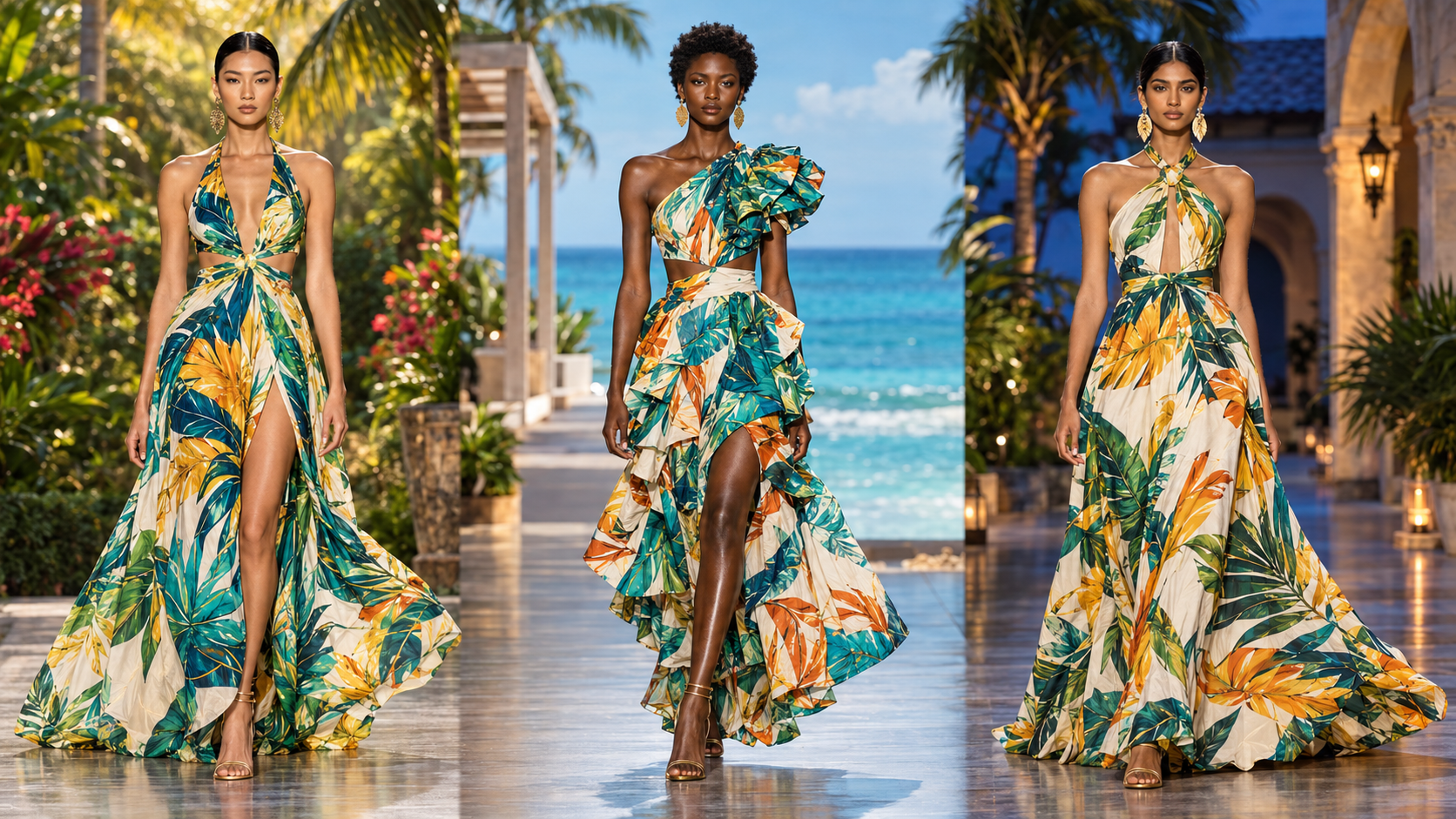
This article is part of our ‘The Business of Caribbean Fashion™’ series, inspired by Chapter 8 by Jessel Brizan, ‘Caribbean Fashion Marketing: Defining Caribbean Fashion’, in the ‘De Gruyter Handbook of Fashion Marketing’ edited by Olga Mitterfellner (De Gruyter Brill, 2026).
One of the greatest threats to Caribbean fashion is not competition from Paris, Milan, or New York. It is becoming indistinguishable from them. In today's global fashion industry, brands are increasingly chasing the same trends, following the same algorithms, collaborating with the same influencers, and adopting similar aesthetics. This has led to a marketplace filled with products that are technically different but strategically similar. While this presents a challenge for many industries, it poses an existential risk for Caribbean fashion. The Caribbean cannot compete with the world's largest manufacturing economies in terms of production, nor can it match the spending power of the largest luxury groups. However, it does possess something that is becoming increasingly rare in the global marketplace: a unique cultural identity that cannot be replicated. If this identity is diluted in the pursuit of global relevance, the Caribbean fashion industry risks losing its greatest competitive advantage.
Globalisation Has Created a Paradox
Globalisation has granted access to larger markets. Digital commerce, international logistics, and social media now enable even the smallest fashion brands to reach customers globally. However, globalisation has also led the same platforms to expose brands to similar trends, visual references, and commercial pressures. As a result, fashion brands from very different cultures increasingly resemble one another. While consumers enjoy more choices, they often find less diversity.
Competitive Advantage Comes From Difference, Not Similarity
One of the fundamental principles of strategy is that competitive advantage relies on differentiation. Businesses succeed by offering something unique that competitors cannot easily replicate. This principle is equally relevant in the fashion industry. The Caribbean's strength does not stem from its ability to imitate European luxury or American contemporary fashion. Rather, its advantage lies in perspectives shaped by centuries of cultural exchange, migration, resilience, indigenous heritage, African traditions, Indian influences, European legacies, Asian diasporas, Carnival, music, craftsmanship, and tropical environments. No other region possesses this exact combination. That uniqueness is not merely a marketing slogan. It is an economic asset.
Cultural Hybridity Is Strategic Capital
Earlier in this series, we highlighted that cultural hybridity is one of the Caribbean's greatest competitive advantages. This is why homogenisation poses such a significant threat. The Caribbean's layered cultural identity enables designers to create products that reflect multiple histories, traditions, and influences without being tied to any single influence. This depth of cultural expression cannot be manufactured. It evolves organically over generations. As consumers increasingly seek authenticity and meaningful stories, cultural hybridity gives Caribbean fashion a unique form of intellectual property inherent in its identity. The challenge lies in protecting this valuable asset while continuing to innovate.
The World's Strongest Fashion Cultures Protect Their Identity
The most influential fashion ecosystems have often succeeded by preserving their cultural foundations. For example, Italian luxury fashion emphasises craftsmanship, regional production, and heritage. Japanese fashion is internationally respected for its distinctive design philosophies and cultural perspectives. Similarly, Scandinavian fashion has built a global reputation for functional minimalism that reflects regional values. More recently, African designers have demonstrated that cultural specificity can strengthen rather than limit international appeal. Brands such as Thebe Magugu, Tongoro, and Maxhosa Africa have embraced local narratives, indigenous craftsmanship, and contemporary interpretations of heritage as central elements of their global positioning. These industries compete on the global stage by embracing their authentic identities rather than diminishing them.
The Digital Economy Rewards Distinctiveness
The rise of digital platforms has intensified competition. Consumers now encounter thousands of products every day, making attention one of the world's most valuable commercial resources. In this environment, brands that blend into the marketplace risk becoming invisible, while those with distinctive identities stand out and are more memorable. Ironically, the same digital economy that promotes uniformity also rewards originality. Social media, creator economies, and digital storytelling enable culturally unique brands to engage and connect with highly targeted audiences globally. The future favours brands with clearly defined identities that can attract passionate communities, rather than those with universal appeal. For Caribbean fashion, this presents a significant opportunity.
Homogenisation Is Not Only an Aesthetic Issue
Cultural homogenization is often discussed only in terms of design, but its implications run much deeper. When fashion education relies solely on imported business models, it overlooks valuable local knowledge. When trend forecasting ignores regional consumer behaviour, product development becomes less relevant. When branding simply imitates international competitors, it weakens authentic positioning. Additionally, when retail experiences replicate global formats without local interpretation, customer engagement loses its significance. Homogenisation impacts how industries think, innovate, educate, manufacture, and communicate, ultimately affecting their competitiveness.
Preserving Identity Does Not Mean Rejecting Innovation
Protecting cultural identity should not be confused with resisting change. Innovation is crucial, as is technology, digital commerce, and artificial intelligence. AI will increasingly impact fashion design, forecasting, supply chain management, and customer engagement. The challenge is to ensure that technology enhances cultural identity rather than replaces it. The most successful Caribbean brands will integrate tradition and innovation. Heritage should serve as the foundation upon which innovation is built.
What Caribbean Fashion Needs to Do Next
The Caribbean fashion industry should treat cultural identity as a strategic resource that warrants targeted and deliberate investment. Fashion education must encompass Caribbean design history, regional consumer research, cultural studies, and business strategy, in addition to global industry knowledge. Governments need to recognise cultural industries as key drivers of economic diversification and competitiveness, rather than merely as expressions of national identity. Industry associations need to support the documentation of traditional craftsmanship, indigenous knowledge, textile practices, and regional design innovation. Entrepreneurs need to create brands that convey cultural significance without relying on stereotypes. Most importantly, the region needs to develop a cohesive Caribbean fashion narrative while celebrating its inherent diversity. A strong regional identity should enhance, not overshadow, local identities.
The Future Will Belong to the Most Distinctive Cultures
The previous article argued that the Caribbean needs a regional fashion strategy that prioritises and protects its most valuable resource, culture. The global fashion industry needs fresh perspectives, innovative aesthetics, and new creative systems rather than another iteration of what already exists. The Caribbean is in a unique position to offer these advantages, but only if it resists the temptation to compete through imitation. In a world where products are increasingly similar, culture has become one of the few competitive advantages that cannot be outsourced, automated, or easily copied. The future of fashion will be shaped by brands that remain true to themselves, rather than by those that conform to international standards.
Click here to review The Business of Caribbean Fashion™ series.
Click here to order a copy of the De Gruyter Handbook of Fashion Marketing.

Archive
- October 2026
- September 2026
- August 2026
- July 2026
- June 2026
- May 2026
- April 2026
- March 2026
- February 2026
- October 2025
- September 2025
- July 2025
- May 2025
- March 2025
- September 2023
- August 2023
- June 2023
- May 2023
- January 2023
- September 2022
- February 2022
- May 2021
- April 2021
- March 2021
- December 2020
- October 2020
- August 2020
- July 2020
- June 2020
- March 2020
- September 2019
- June 2019
- May 2019
- March 2019
- February 2019
- September 2018
- September 2016
- January 2016